This site uses cookies to provide services and traffic analysis.
There you can customize which cookies you allow us to use. You can change your consent at any time.

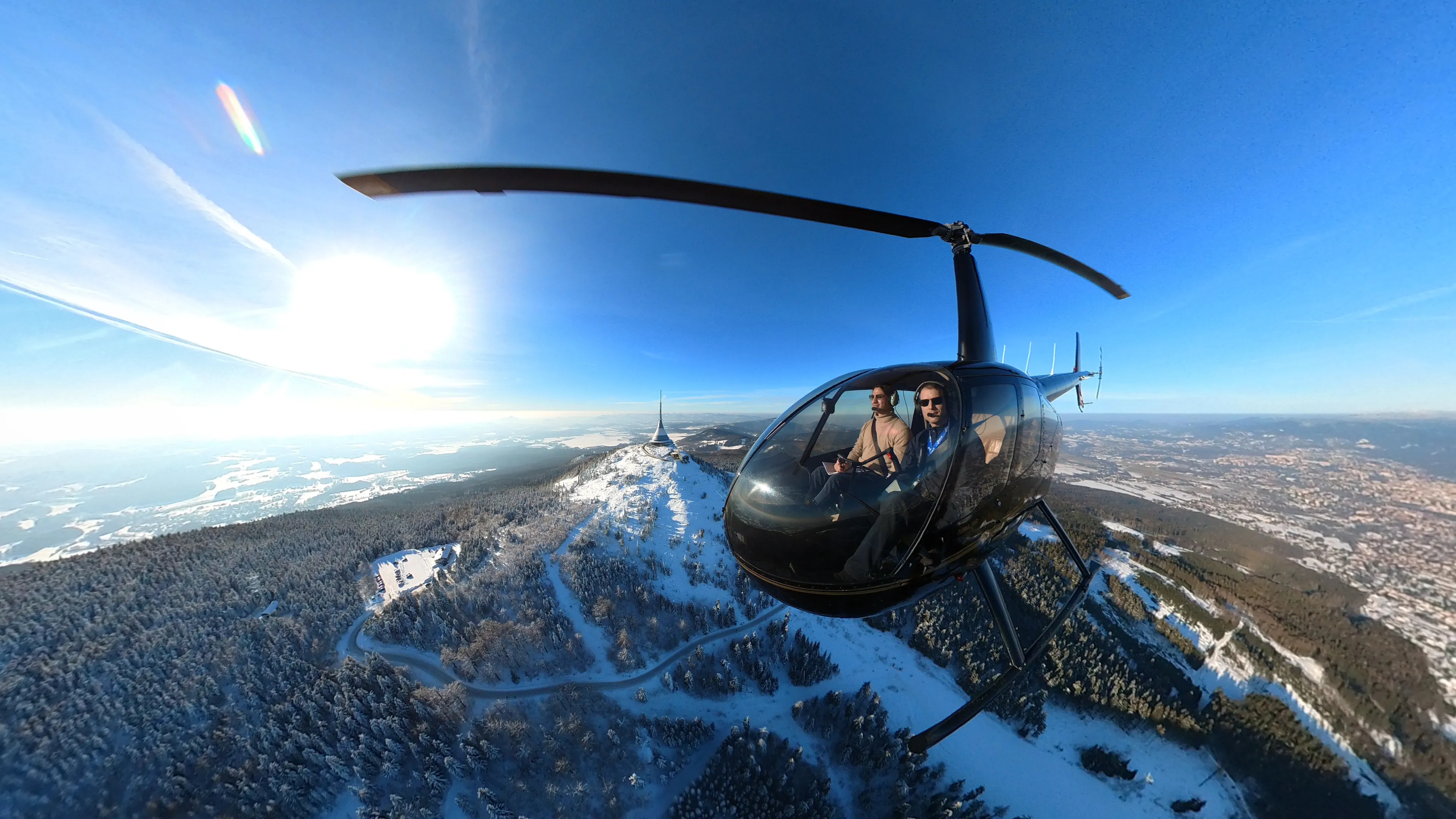
First, it is necessary to undergo theoretical training in subjects essential for flying at our school. The student gradually familiarizes themselves with the flight manual of the R22 or R44 helicopter, as well as with helicopter aerodynamics and mechanics, navigation, meteorology, aircraft instruments, aviation regulations, and other topics related to flying. After acquiring the basic theoretical knowledge, practical training begins. Solo flights are an important part of practical training, as well as navigation flights, including flights to international airports. Once the student successfully completes the practical training and passes the theoretical exams at the ÚCL Prague, they are recommended for the skill test, which is the final stage of obtaining the private pilot license.
Training follows the EASA legislation (Part FCL). The theoretical training consists of 100 instructional hours, of
which 50% can be self-study. Practical training includes a minimum of 45 flight hours, of which 35 must be dual
instruction with an instructor. However, on average, the training ranges from 50 to 55 hours, depending on the
applicant's abilities.
The exact schedule is always adjusted to the weather conditions, abilities, and time constraints of each student.
The PPL(H) license entitles its holder to fly for their own purposes but not commercially. (For commercial aviation activities, the pilot must hold a Commercial Helicopter Pilot License.) The type qualification for the helicopter on which the training was conducted is also recorded in the issued competency license. Type qualifications for helicopters are valid for one year from the date of issuance and their validity is extended by annual revalidation.

This site uses cookies to provide services and traffic analysis.
There you can customize which cookies you allow us to use. You can change your consent at any time.